
The carousel said the difference between mat and reformer isn’t the exercises, it’s the information your body receives. This article explains what springs actually do, why a moving base changes everything, what the mat does better, what the one direct study comparing them found, and how to choose.
1 · Not a ranking
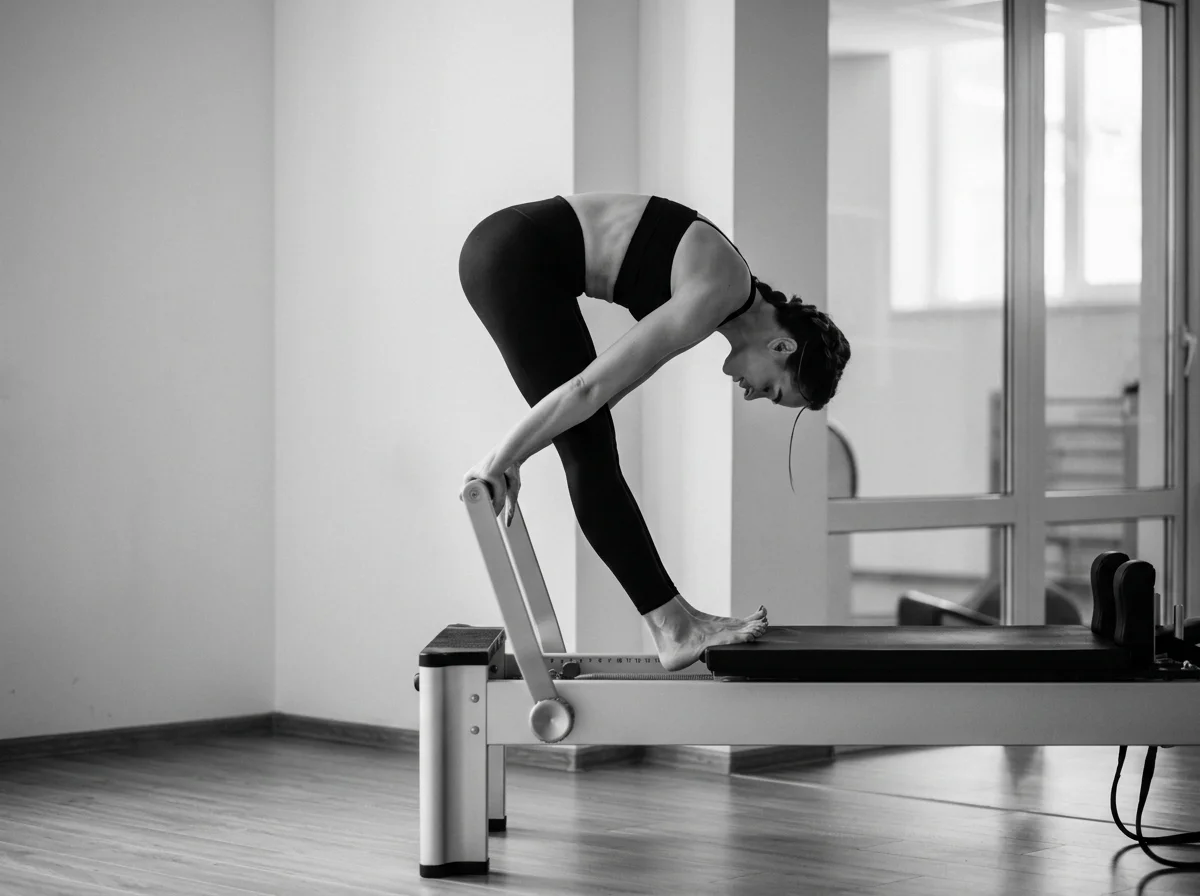
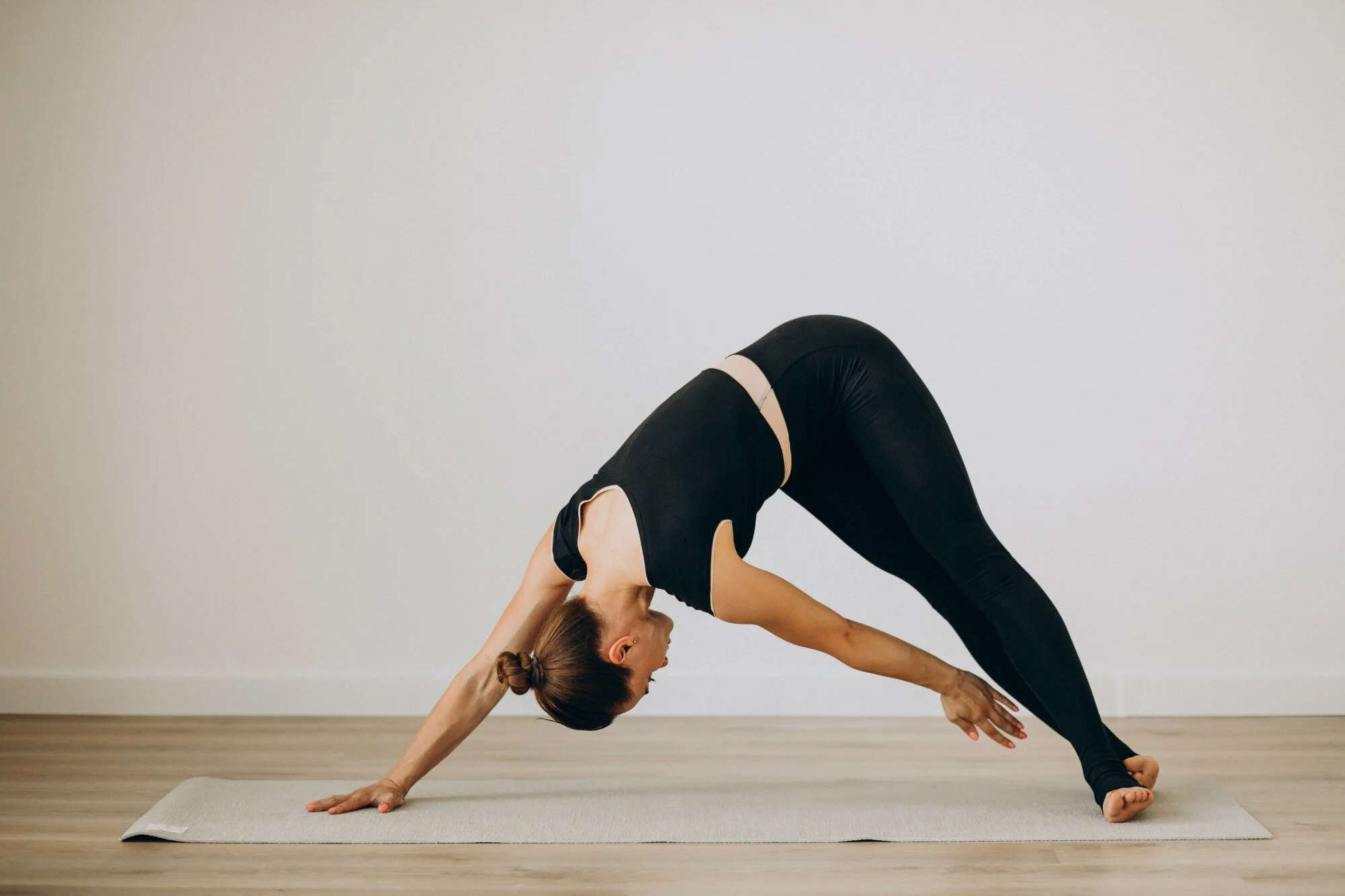
Mat Pilates is real Pilates. Joseph Pilates published his method as a mat sequence of 34 exercises, and the mat is still where the method is most portable: you can do it anywhere, which matters more for long-term results than almost anything else.
The reformer isn’t a “better” mat. It’s a different environment. The same movement on each one asks your nervous system different questions.
2 · What a spring does that gravity doesn’t
On the mat, your load is your body weight, and gravity always pulls the same way: down.
A spring behaves differently in three ways:
Direction. The pull comes from wherever the spring is anchored, so we can load you sideways, forwards or upwards, not only down.
Rising resistance. The more a spring stretches, the harder it pulls back. That means the load is highest at the end of the movement, often exactly where control tends to fade.
Help or challenge. Depending on the exercise, the same springs can resist you or assist you. In some exercises they make a movement possible for someone who couldn’t do it on the mat yet. In others they make it much harder. (Please don’t ask for more springs to feel the burn). Then there’s the return. As the carriage comes home, you control the spring as it shortens. That’s eccentric work, lengthening under load, which builds control and tissue capacity in a way that slow mat work often doesn’t.
One spring, two jobs in a single movement: resist on the way out, control on the way back.
3 · Contact points as information
The footbar, the straps, the shoulder blocks and the headrest are all points of contact. Every one of them gives your nervous system information: where you are, which way you’re pushing, how hard.
This matters for learning. Research on motor learning shows that focusing on an effect outside the body (“push the bar away”, “keep the strap still”) usually helps people move better and learn faster than focusing on a muscle (Wulf, 2013). The reformer is full of external targets like these. On the mat, there are fewer, so you have to create more of that reference yourself.
4 · A floor that moves
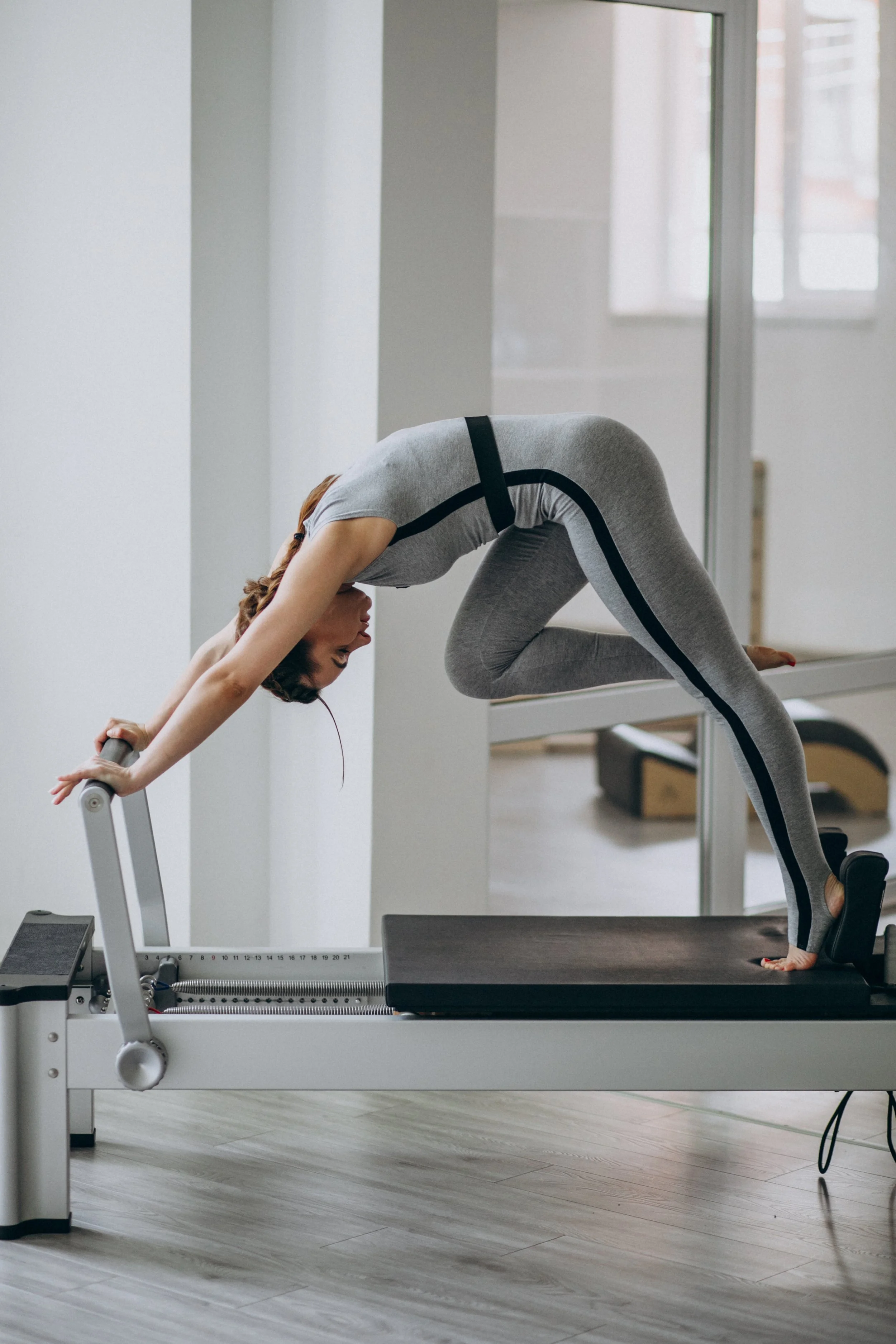
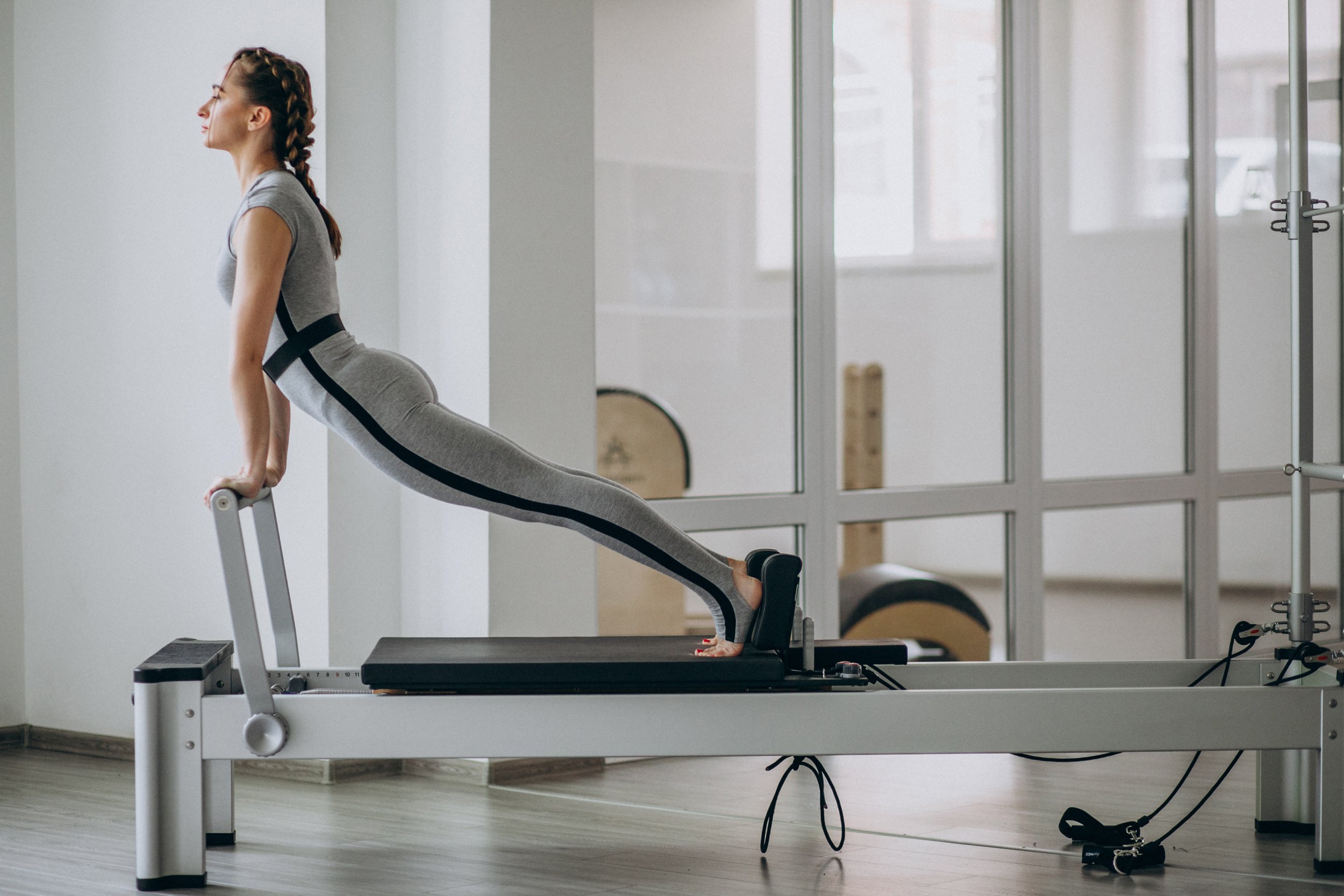
The floor never moves. The carriage does. Standing or kneeling on a moving surface means your balance system has to keep updating where you are, and your trunk has to prepare for movement it can’t fully predict.
Training on less stable surfaces is known to challenge balance and the stabilising muscles, though it lowers how much force you can produce at the same time (Behm & Colado, 2012). That’s a useful trade-off: unstable work for control, stable work for strength. A good programme uses both.
5 · What the mat does better
No help. Some exercises are harder on the mat, because there’s no spring to assist. A roll-up on the mat asks more of the trunk than a roll-up with straps.
Body awareness. With fewer external cues, you have to rely more on your own sense of where your body is. That’s a skill in itself.
Transfer. Your daily life happens against gravity, on the floor, with no straps. The mat is closer to that.
Access. No equipment, no studio. You can practise at home, on holiday, every day.
6 · What the direct comparison found
There isn’t much research comparing the two head to head. One randomised trial in people with chronic low back pain compared 12 weeks of equipment-based Pilates with 12 weeks of mat Pilates. Both groups improved in pain and function. The equipment group improved somewhat more, and showed greater activation of the deep abdominal muscle (Cruz-Díaz et al., 2017).
It’s one study in one group of people, so we shouldn’t overstate it. But it fits what we see in the studio: both work, and the reformer can make certain things easier to learn and to load.
7 · A gradient, not a hierarchy
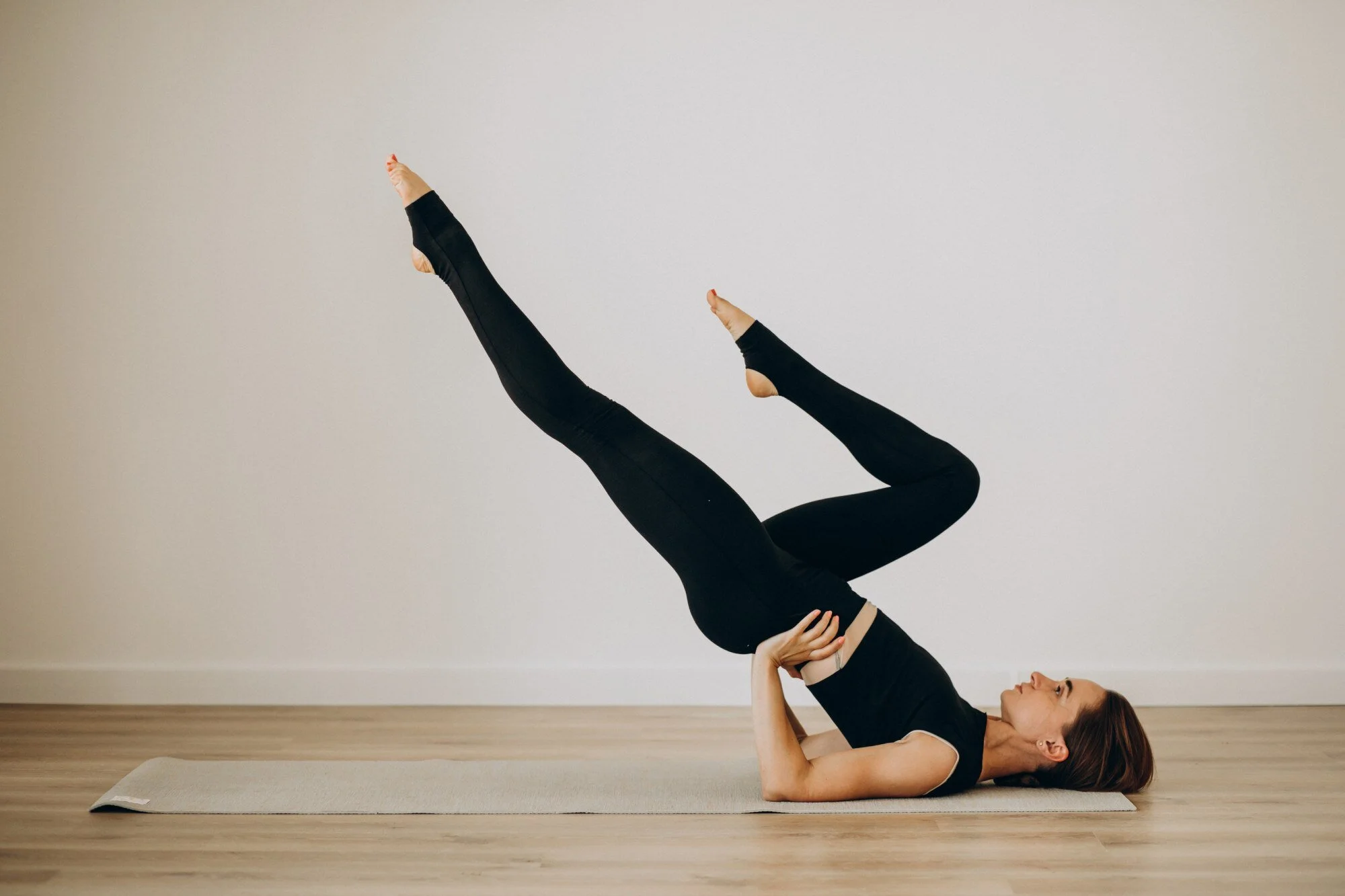
A useful way to think about it: the reformer can give more support and feedback, or more challenge, depending on how it’s set up. The mat offers less support and less external feedback.
That’s why, after an injury or with persistent pain, many teachers and physios start on equipment: the springs can take some of the load and give clear feedback. As capacity comes back, more mat work and less support makes sense. It’s a common approach in practice rather than a fixed rule, and it always depends on the person.
8 · How to choose
If your goal is…
Coming back from injury or pain: start with more equipment, add mat as you progress.
Strength and load: reformer, with real spring resistance.
Balance and control: both, especially standing work on the moving carriage.
Practising at home and staying consistent: mat.
The full method: Try to experiment a studio that provides you access also to the Wunda Chair, Cadillac, Ladder Barrel, Spine Corrector, Ped-o-pull and more. Each reveals things the other hides.
9 · Try this: one movement, two environments
Do 5 slow roll-ups on the mat. Notice where it gets hard and where you use momentum. Next time you’re on the reformer, try the same roll-up with the straps, or a roll-down with the springs. Where does it get easier? Where does it get harder? The difference tells you something about how your body organises the movement.
Different conversations. All worth having.
Only ever done mat? Come and feel the other conversation. Book a session.
References1. Pilates JH, Miller WJ. Return to Life Through Contrology. J.J. Augustin; 1945.2. Wulf G. Attentional focus and motor learning: a review of 15 years. Int Rev Sport Exerc Psychol. 2013;6(1):77–104.3. Behm DG, Colado JC. The effectiveness of resistance training using unstable surfaces and devices for rehabilitation. Int J Sports Phys Ther. 2012;7(2):226–241.4. Cruz-Díaz D, Bergamin M, Gobbo S, Martínez-Amat A, Hita-Contreras F. Comparative effects of 12 weeks of equipment based and mat Pilates in patients with chronic low back pain on pain, function and transversus abdominis activation: a randomized controlled trial. Complement Ther Med. 2017;33:72–77.