
The body needs variability: why “slow and safe” is not the whole story
By Elena · @moowpilates · Body & Anatomy
There is a version of Pilates that gets sold as the antidote to everything intense, heavy, and fast. Low weights. Controlled tempos. Nothing ballistic. This version positions itself as safer, gentler, more intelligent. And it’s partially right — and mostly incomplete.
The body adapts to exactly what you ask of it. Ask it only to be slow, and that’s what it becomes. Ask it only to hold, and it learns to hold. Ask it to react — and it learns that too.
The SAID principle: you become what you train
SAID stands for Specific Adaptation to Imposed Demands. It is one of the oldest and most validated principles in exercise physiology. It means your neuromuscular system gets precise, not general — it builds the exact capacities it is repeatedly asked to produce, and it does not automatically transfer those gains to capacities it hasn’t trained.
Train exclusively in slow, controlled, low-load ranges? You will get better at slow, controlled, low-load movement. You will not, in the process, be training reactive stability, rate of force development, elastic recoil, or power — and those are the qualities life will most urgently call on when things go wrong.
The spectrum of stimulus
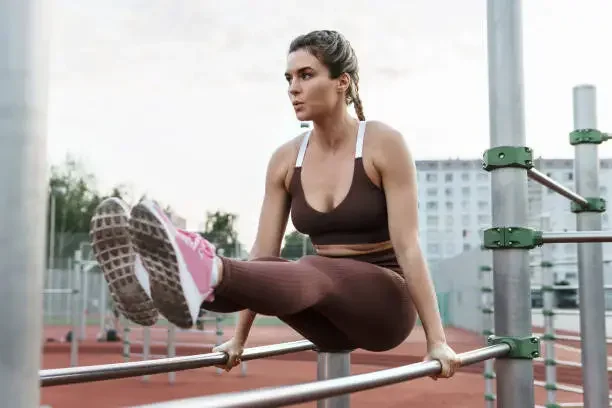
Movement is not one thing. The neuromuscular system responds to a range of stimulus types, each with distinct training effects:
Isometric - Hold under load without movement → trains positional strength & endurance → activates high-threshold motor units at extreme ranges
Eccentric - Lengthen under tension → highest tensile load per motor unit → critical for deceleration, landing mechanics, injury prevention
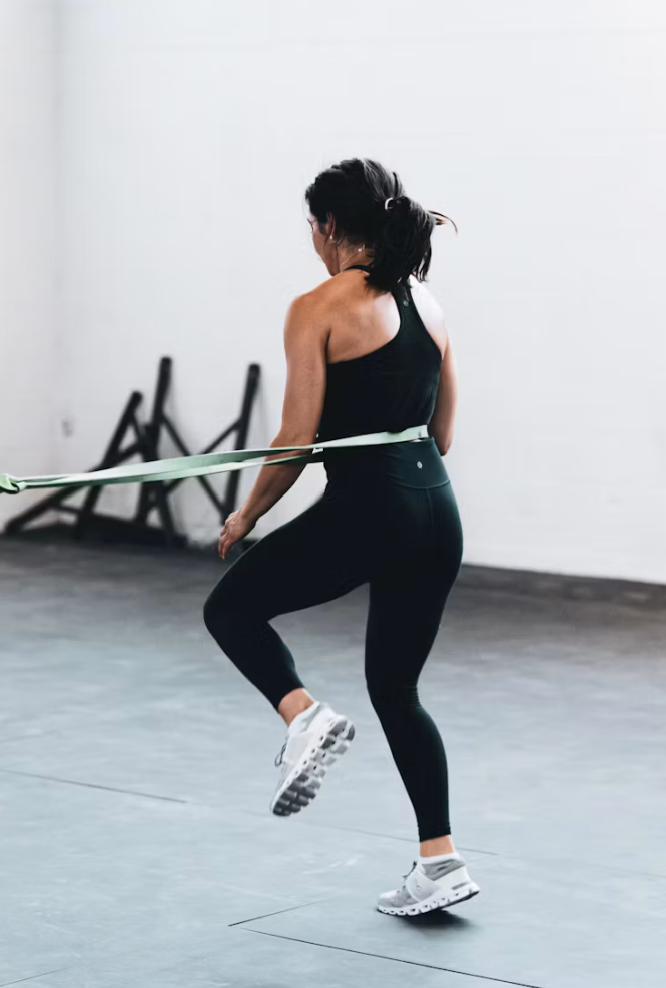
Elastic / stretch-shortening cycle - Rapid stretch followed by recoil → trains tendon stiffness & elastic energy return → underlies all reactive, bouncy movement
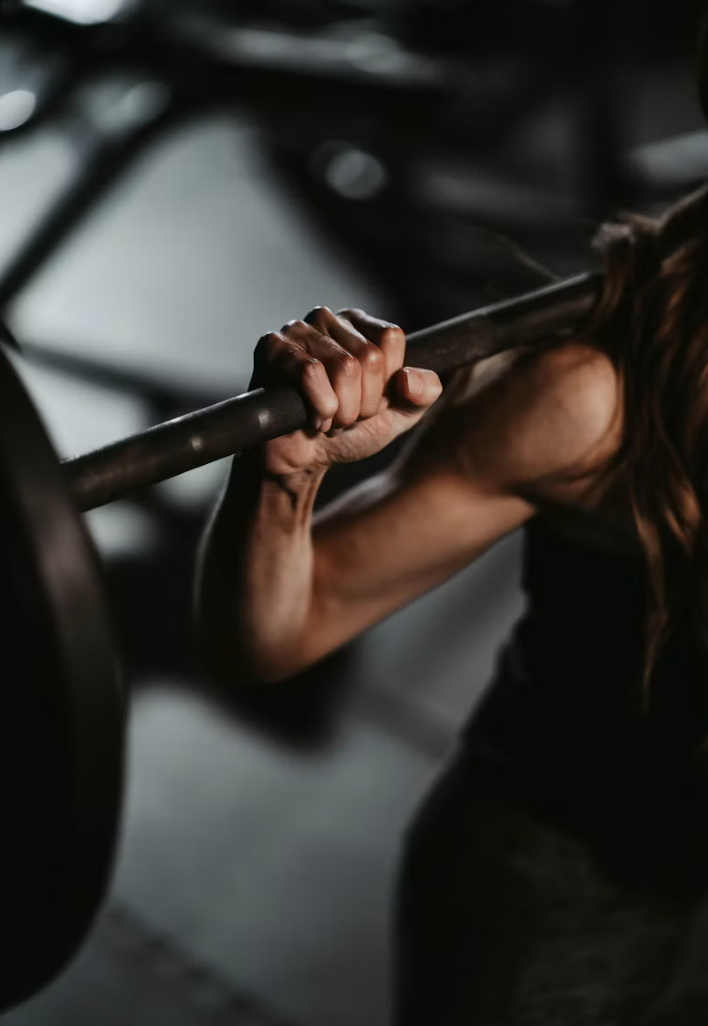
Ballistic / power - Maximum rate of force development → recruits fast-twitch (Type II) fibres → trained only by actually moving fast under load
Why rate of force development matters
Catching a fall takes approximately 200 milliseconds. At that speed, maximum strength is irrelevant — you can’t access it in time. What saves you is rate of force development (RFD): how fast the neuromuscular system can produce tension from a resting state. RFD is trainable. It is also specifically degraded by slow-only training, and specifically developed by power and reactive training. This is not a marginal consideration for older adults — it is a primary one. Research by Skelton and colleagues on power training for fall prevention found that power training produced better functional outcomes than strength training in older adults precisely because of its RFD effects.

Pilates already has the variability tools
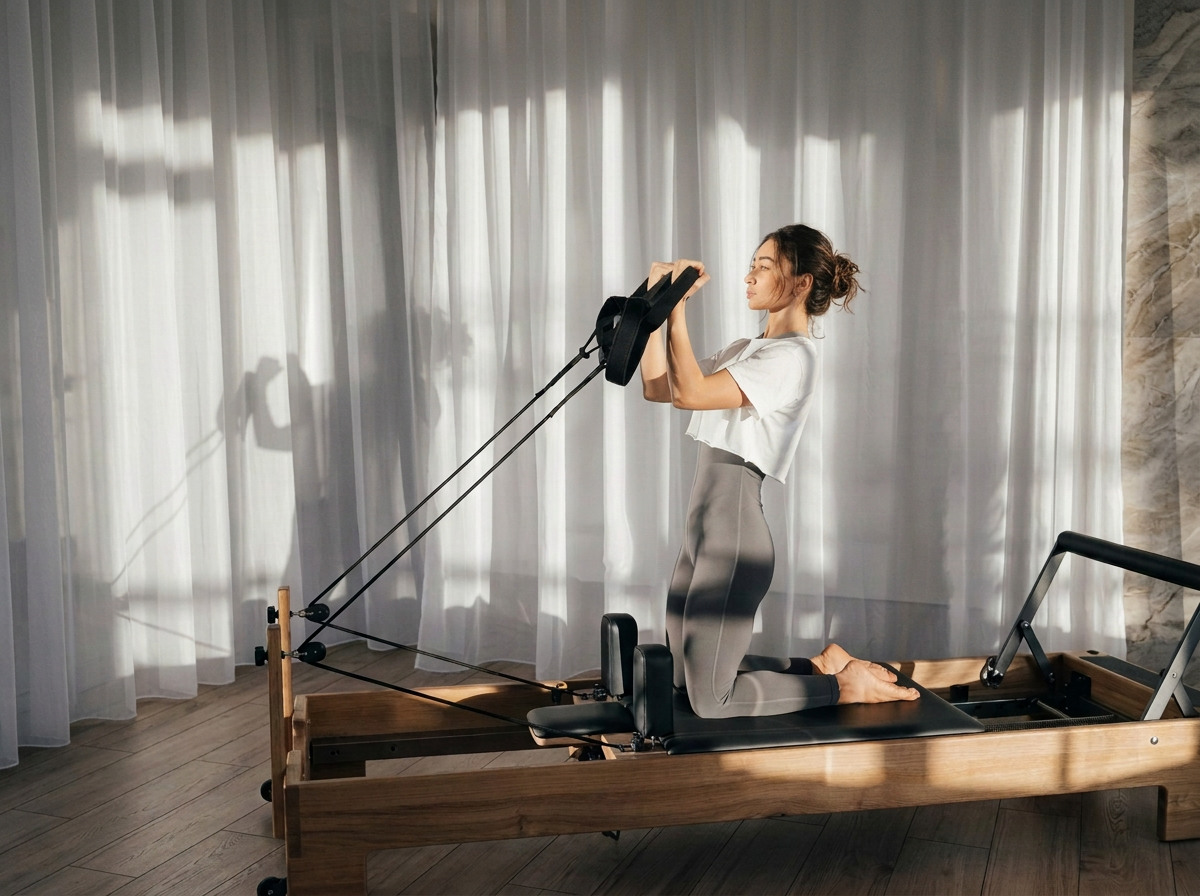
This is worth saying clearly: the Pilates method, in its full expression, was built with these stimulus types in mind. The jumping board is a plyometric tool — it trains the stretch-shortening cycle, elastic recoil, and reactive force production. Heavy spring footwork develops posterior chain power. The eccentric return phase of nearly every reformer exercise — when the carriage comes back against spring resistance — is an eccentric demand that slow-paced classes still capture, even unintentionally. Variable spring tension means the load changes across the range, creating a more complex neuromuscular demand than constant-load training.
The tools are there. The question is whether instructors use them — or whether the “slower is safer” narrative has flattened the method into something less than it was designed to be.
What actually makes a class safe
Slow tempo does not make a class safe. Neither does light load. What makes a class safe is an instructor who understands the person in front of them: their injury history, their current capacity, their movement patterns, their goals. An instructor who can progress, regress, and modify in real time. One who has been exposed to a wide range of bodies and contexts, and who has developed the clinical reasoning to make decisions about load, tempo, and exercise selection that serve that specific person.
Timidity disguised as safety is not education. It is an absence of it.
Want to train with the full range of what your body can do? This is how we think about movement at Moow. Book a session.
References1. Selye H. A syndrome produced by diverse nocuous agents. Nature. 1936;138:32. [SAID / General Adaptation Syndrome basis]2. Komi PV. Physiological and biomechanical correlates of muscle function. Exerc Sport Sci Rev. 1984;12:81–121. [stretch-shortening cycle]3. Aagaard P et al. A mechanism for increased contractile strength of human pennate muscle in response to strength training. J Physiol. 2001;534:613–623. [rate of force development]4. Skelton DA et al. Effects of resistance training on strength, power, and selected functional abilities of women aged 75 and older. J Am Geriatr Soc. 1995;43:1081–1087. [power training and fall prevention]5. Lexell J. Human aging, muscle mass, and fiber type composition. J Gerontol A Biol Sci Med Sci. 1995;50A:11–16. [Type II fiber loss with age]