
We spend a lot of time looking at our bodies from the outside. This article is about living in yours from the inside: how it feels, what it can do for your actual life, and why that, not a look, is what training is for.
1 · A home is for living in, not for showing
Most fitness content treats the body as a project. Something to sculpt, tone, fix or transform, usually for someone else's eyes. That framing has a cost. When the body is a project, it's never finished, and it's always slightly wrong.
A home works differently. You don't judge a home by how it photographs. You judge it by how it feels to live in: whether it's warm, whether things work, whether you can rest there. That's the standard I'd like us to hold our bodies to.
Not a machine to optimise. Not a problem to fix. A home to take care of.
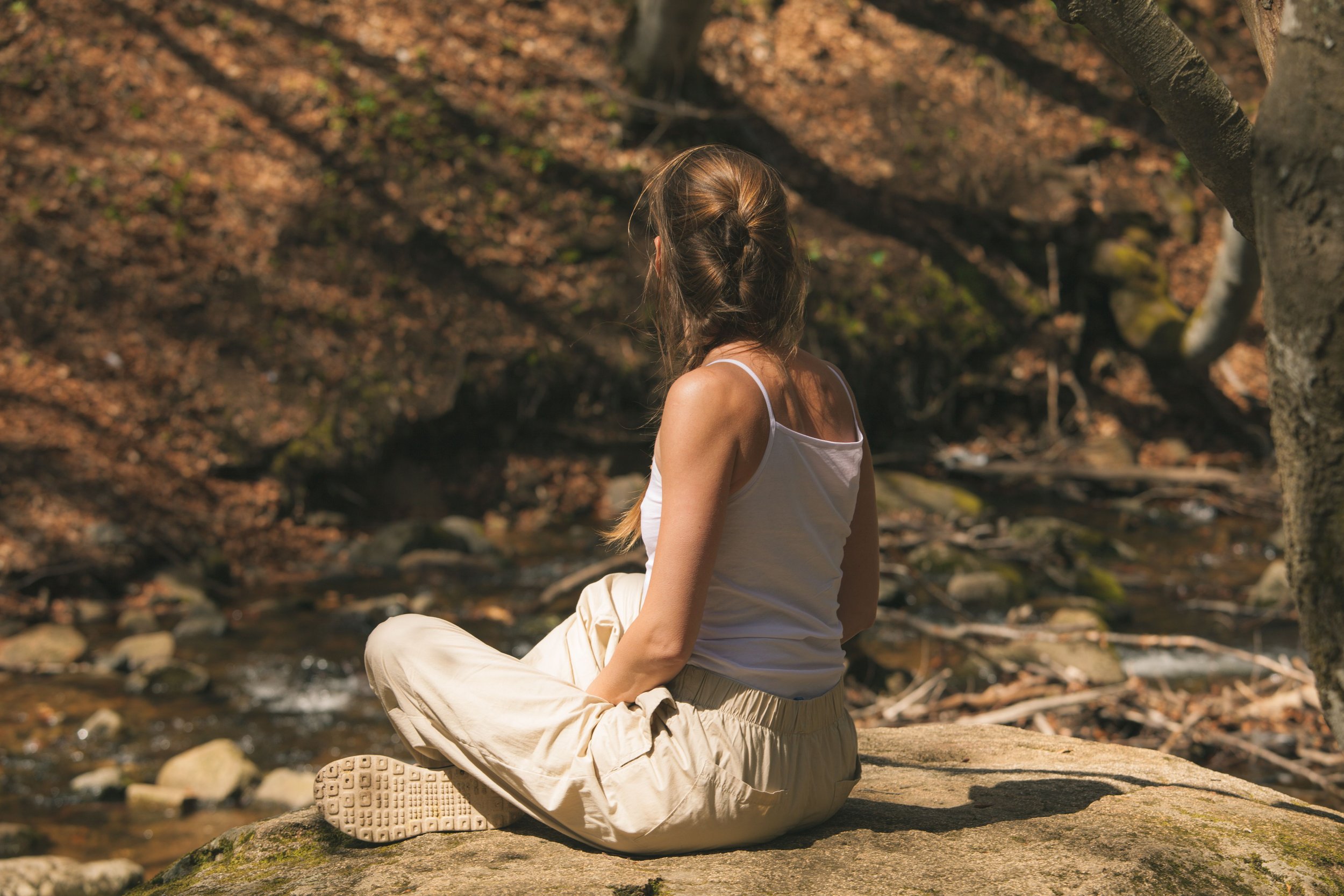
2 · Feeling at home starts with feeling
You can't feel at home in a body you can't sense. Two senses do most of that work, and both are trainable.
Proprioception tells you where your body is in space: the angle of your knee, the weight on your feet, whether your shoulders are up by your ears. It comes from receptors in muscles, tendons, joints and fascia.
Interoception tells you what's happening inside: your heartbeat, your breath, hunger, tension, fatigue. Neuroscientist Bud Craig described it as the sense of the physiological condition of the body, and it's closely tied to how we feel emotionally (Craig, 2002).
Researchers who study body awareness describe it as several skills at once: noticing sensations, not ignoring or panicking about them, being able to direct attention to them, and trusting what they tell you (Mehling et al., 2012). Every one of those is something a good movement practice asks for. When I ask "where do you feel that?" in class, that's what we're training.
“Your body is the only home you will ever live in. Treat it like somewhere you actually want to stay.”
3 · A home that does what your life asks of it
A comfortable home also has to work. For a body, that means capacity for the ordinary things: carrying shopping up the stairs, getting down to the floor and back up, lifting a child or a suitcase, catching yourself when you trip.
These aren't small things. In a study of almost 140,000 adults across 17 countries, grip strength predicted mortality and cardiovascular disease better than blood pressure did (Leong et al., 2015). The ability to sit down on the floor and stand up without using your hands is also linked to how long people live (Brito et al., 2014). Strength and coordination aren't vanity metrics. They're how well your home holds up.
That's why "slow and safe" alone isn't enough, and why we train balance, strength, speed and range, not just one of them.
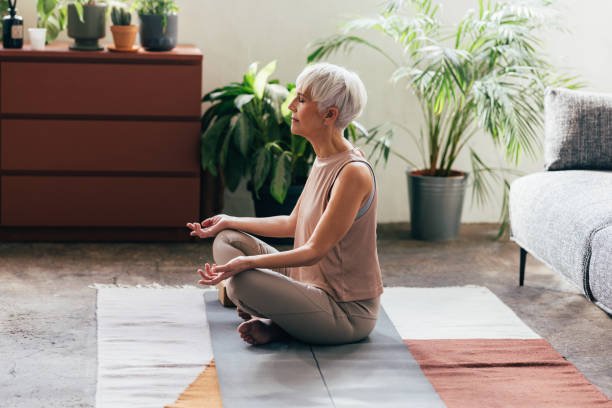
4 · A home where you feel safe
Pain is one of the main reasons people stop feeling at home in their bodies. Modern pain science describes pain as a protective output of the nervous system: a signal that the brain judges something as a threat, not a direct readout of damage (Moseley, 2007). That's why pain can persist after tissues have healed, and why stress, sleep and fear change how much things hurt.
The practical side of this is hopeful. Movement that feels safe, and that gradually builds in difficulty, teaches the nervous system that it doesn't need to be on guard. You don't have to wait for pain to vanish before you move. Often, moving well is part of how it settles.
5 · Maintenance, not renovation
Homes rarely need a dramatic renovation. They need regular care: a window opened, a leak fixed early, a room kept in use. Bodies are the same.
The World Health Organization recommends 150 to 300 minutes of moderate activity a week, plus strength work on at least two days (Bull et al., 2020). Spread across a week, that's less than it sounds. A couple of Pilates sessions, walks, stairs and a bit of floor time already go a long way.
What matters most is that you keep coming back. A body you visit once a month for an intense "reset" doesn't feel like home. One you check in with often does.

6 · What this looks like in a session with me
Every session starts by noticing: how you arrived, where your weight sits, how you're breathing. Then we work on capacity, with real load, variety and progression. We don't chase a look, and we don't treat your body as broken. We adapt to the day you're having.
The goal is simple to say and takes time to build: a body that's strong enough to carry you, that you can trust, and that you actually want to be in.
7 · Try this: three questions
Before you get out of bed tomorrow, or at any quiet moment, ask yourself:
1. What do I notice? Temperature, tension, breath, weight. Just notice, without judging.
2. What does my body need today? Movement, rest, food, fresh air, company.
3. What's one small thing I can give it? A walk, five minutes on the floor, an early night.
That's taking care of your home.
References
1. Craig AD. How do you feel? Interoception: the sense of the physiological condition of the body. Nat Rev Neurosci. 2002;3(8):655–666.
2. Mehling WE et al. The Multidimensional Assessment of Interoceptive Awareness (MAIA). PLoS One. 2012;7(11):e48230.
3. Leong DP et al. Prognostic value of grip strength: findings from the Prospective Urban Rural Epidemiology (PURE) study. Lancet. 2015;386(9990):266–273.
4. Brito LBB et al. Ability to sit and rise from the floor as a predictor of all-cause mortality. Eur J Prev Cardiol. 2014;21(7):892–898.
5. Moseley GL. Reconceptualising pain according to modern pain science. Phys Ther Rev. 2007;12(3):169–178.
6. Bull FC et al. World Health Organization 2020 guidelines on physical activity and sedentary behaviour. Br J Sports Med. 2020;54(24):1451–1462.
Want a body that feels like home? This is what every session at Moow is built around. Book a session.
